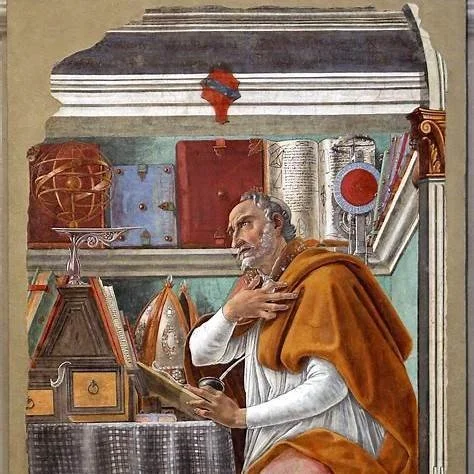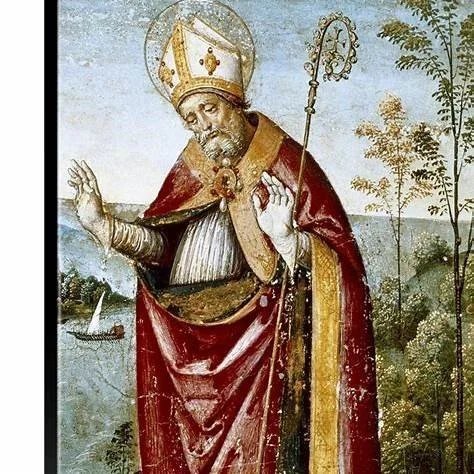

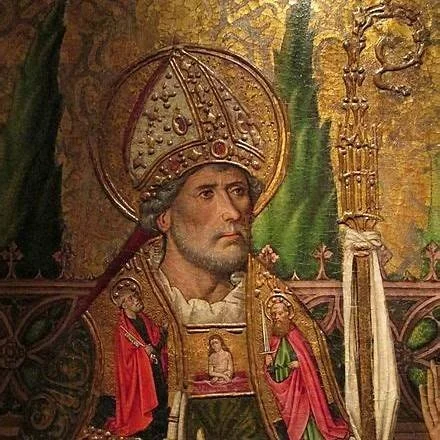
Inspired by St Augustine’s journey from searching to belonging, we help young people grow in wisdom and faith—forming minds that seek truth, hearts that choose compassion, and hands ready to serve.
St Augustine of Hippo (354–430) is the school’s patron saint: a North African Christian bishop, theologian, and one of the most influential thinkers in Western Christianity.
Quick overview:
Early life & conversion: After a restless early adulthood and a long search for truth, Augustine’s life changed dramatically—he was baptised in AD 386 (in Milan) and committed himself to a life of faith and service.
Bishop & teacher: He became Bishop of Hippo (in today’s Algeria) and was renowned for preaching, writing, and guiding the Church through turbulent times.
Famous works: His spiritual autobiography Confessions and his sweeping work of Christian philosophy The City of God remain classics.
Feast day: He is commemorated on 28 August in the Western Church.
Common symbols you’ll see in artwork: a bishop’s staff (crozier), a book (his writings), and sometimes a flaming/pierced heart (his love of God and interior conversion).
Inspiration for us:
St Augustine’s story maps directly onto what a Catholic school is trying to form in young people today: thoughtful faith, strong character, and service to others.
A “search for truth” → learning with purpose. Augustine didn’t settle for easy answers; he wrestled with big questions until he found what he believed to be true. That’s a great model for the classroom: encouraging pupils to be curious, to think critically, to read widely, and to connect learning to deeper questions about meaning, values, and vocation.
Conversion and growth → a culture of change and second chances. Augustine’s life is a reminder that people can grow, mature, and make better choices. In school terms, that supports a restorative, nurturing approach—helping young people reflect, take responsibility, and keep moving forward rather than being defined by mistakes.
Head and heart together → faith that thinks, not just feels. As a teacher-bishop and writer, Augustine shows that faith involves the mind as well as the heart. For a school community, that’s an invitation to link prayer, liturgy and RE with real intellectual engagement—so pupils learn to explain what they believe, listen respectfully to others, and make well-reasoned moral choices.
Community and belonging → relationships at the centre. Augustine didn’t live faith as a private project; he built Christian community and served people pastorally. That’s a strong lens for school life: everyone belongs, everyone is valued, and we build a culture of respect where staff, pupils and families look out for one another.
Service and leadership → “make a difference” beyond the school gates. As Bishop of Hippo, Augustine led in difficult times and cared for the needs of his people. For pupils, that inspires leadership rooted in humility: using talents for others, contributing to charities and local service, and acting justly—especially for those who are vulnerable or overlooked.